
The split that decides whether this works
Most support queues are two jobs wearing one uniform. There is the repetitive half: where is my order, what are your hours, how do I reset this, can you resend the invoice. Then there is everything else, where a customer is confused, annoyed, or asking something the documentation never anticipated. AI handles the first half well enough to be worth it and the second half badly enough to cost you customers. Almost every failed deployment comes from refusing to draw that line.
What it genuinely does well
Answering questions that have one correct answer already written down somewhere. Pulling an order status from a system and putting it in a sentence. Collecting the details a human will need before a ticket reaches them, so nobody has to ask for an order number twice. Handling the same question at three in the morning in a language your team does not cover. None of that is glamorous and all of it removes real hours from a week.
Where it fails, expensively
It fails when the customer is upset, because a fluent apology from a machine reads as dismissal. It fails on edge cases, confidently, inventing a policy that sounds plausible and is not yours. It fails on anything with money or legal weight attached, where being wrong is not a bad answer but a liability. And it fails on your best accounts, who notice immediately that they have been routed to a script and draw a conclusion about how much you value them.

Design the handover before the bot
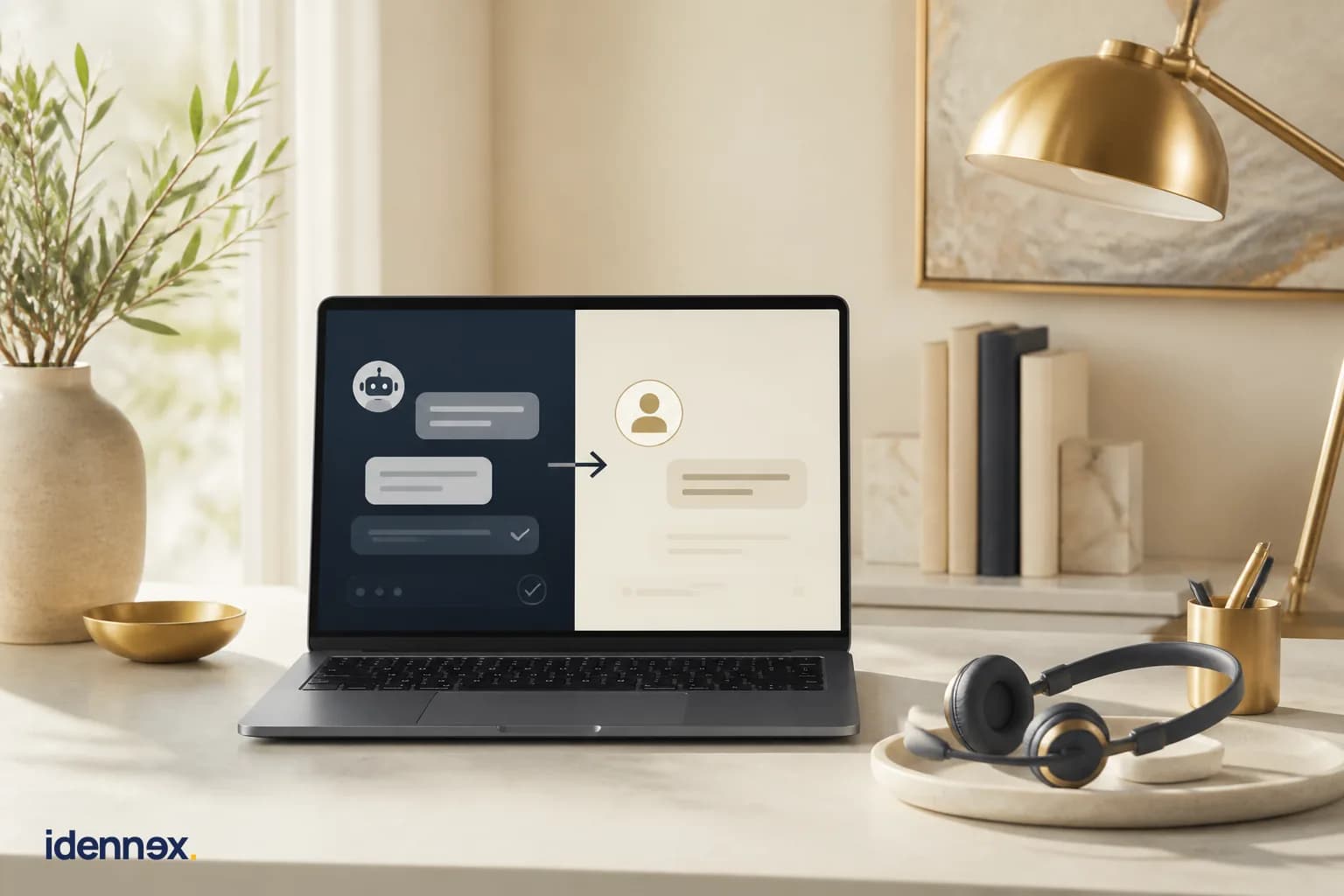
The most important part of an AI support layer is the moment it stops. A customer should be able to reach a person in one step, without arguing, without a hidden menu, and without repeating what they already typed. Systems that make escape difficult generate more anger than the automation ever saved. Decide what the bot may answer alone, what it must escalate, and what it must never touch, and build the exit before you build the entrance.
Talk to us about support automation on WhatsAppIt is only as good as what it reads
An assistant answering from a scattered mess of outdated pages will produce scattered, outdated answers with total confidence. Before deploying anything, get the source material into one current, correct place. Teams usually discover at this point that the real problem was never support volume but the fact that nothing was written down properly. That is the same underlying issue behind most companies that have outgrown spreadsheets, and it is worth fixing whether or not you automate anything.
Say that it is a machine
Disclose it plainly at the start of the conversation. Customers who know they are talking to software adjust their expectations and are far more forgiving of a limited answer. Customers who work it out halfway through feel deceived, and that feeling attaches to the brand rather than to the tool. There is no upside to the pretence. The companies that give their bot a human name and a photograph are buying a small amount of warmth at the price of trust.
Measure resolution, not deflection
Deflection rate counts conversations that did not reach a human, which includes every customer who gave up. It is the metric vendors quote and the one that hides the damage. Track instead how many enquiries were genuinely resolved, how many came back within a week, and what your satisfaction score looks like split between automated and human conversations. If the automated half scores far lower, you have moved cost rather than removed it. Getting this scoped correctly is what custom platform work is usually for.

Written by
Idennex
Strategy-first agency, Istanbul